Twix
Almost half of Gen Z and Millennials are burned out, and still can't allow themselves to stop.
We have internalized the idea that self-worth equals production, turning true rest into a source of anxiety and triggering the 'guilt of doing nothing'.
the problem.
Technology has contributed to increasing this sense of fatigue.
By melting the boundaries between every aspect of our lives, it exposes us to a continuous flow of hyper-connectivity where we are expected to be perpetually available. Technology stripped away all friction and reduced our interactions to mindless scrolling or screen tapping.


In this landscape of digital exhaustion, Homer Simpson's infamous drinking bird stunt feels completely justified.

Technology has contributed to increasing this sense of fatigue.
Technology has contributed to increasing this sense of fatigue. By melting the boundaries between every aspect of our lives, it exposes us to a continuous flow of hyper-connectivity where we are expected to be perpetually available.
Technology stripped away all friction and reduced our interactions to mindless scrolling or screen tapping. In this landscape of digital exhaustion, Homer Simpson's infamous drinking bird stunt feels completely justified.
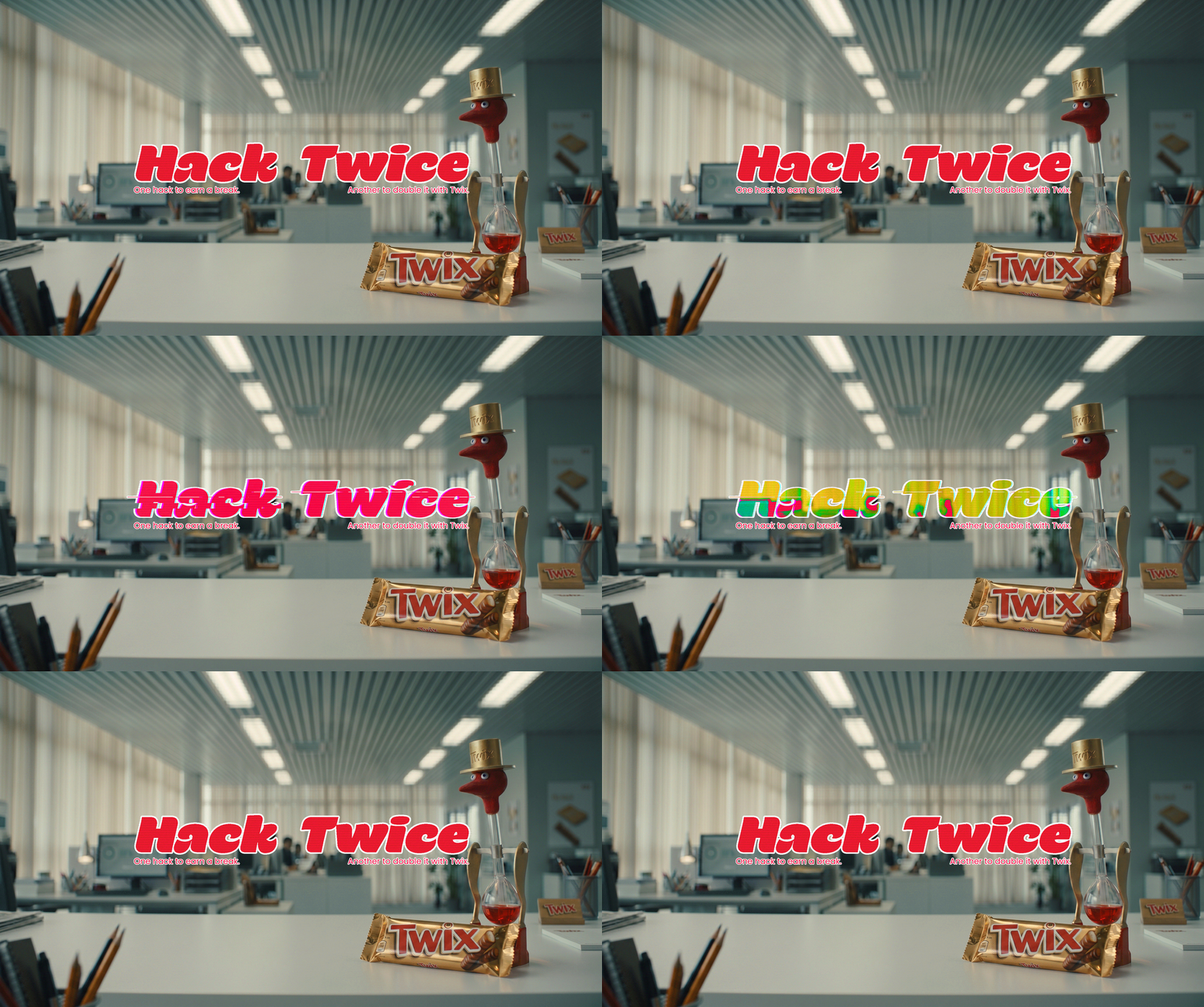
Hack Twice by Twix, where one hack earns a break and another doubles it with Twix.
This campaign frames everyday shortcuts as harmless rebellion against hustle culture.
The iconic Drinking Bird acts as the first hack to trick the system for a moment of downtime. Twix is the definitive reward and second hack, proving that a single snack gives you a good thing twice.

Across our TV commercials, the Bird serves as a visual decoy that awakens the protagonist, triggering a cheeky shortcut to outsmart the routine and steal a break.


The Hack Twice Award.
We invite the public to share their cleverest hacks for earning a break.
Top participants win the limited edition Twix Hack Kit. This includes a branded Drinking Bird and a Golden Keyboard Weight, combining a functional tool with the ultimate reward.


Left Click + Drag: Rotate 3D model
Right Click + Drag: Pan camera
Scroll Wheel: Zoom in/out


